By Merlina Garthe
Cloud-native promises speed and scalability, but architecture is where the real trade-offs surface. In this second IvyInsights feature, Merlina Garthe, Developer at Ivy Partners, looks back months after the OutSystems One Conference to unpack why the shift from OutSystems O11 to ODC is more than a platform upgrade.

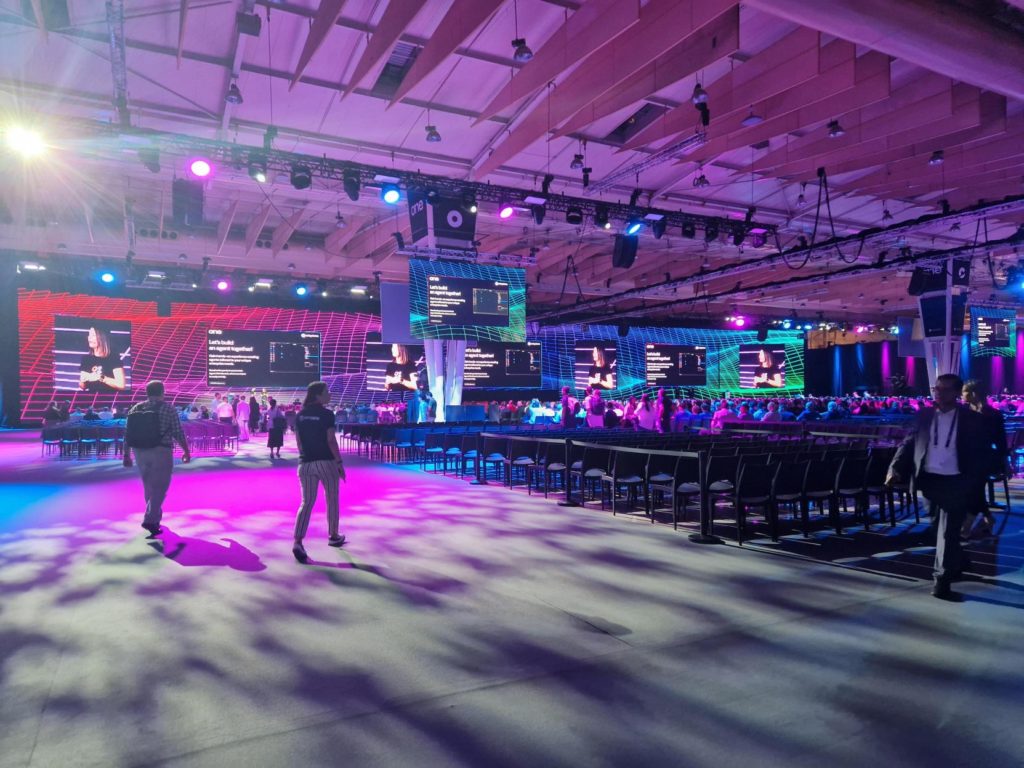
As someone who has been working with OutSystems for some years, I’ve seen firsthand how low-code reshaped enterprise software delivery. OutSystems 11 (O11) played a central role in that shift, enabling teams to move faster while maintaining governance and scale.
However, attending the OutSystems One Conference 2025 in Lisbon made one thing clear: the platform is entering a fundamentally new phase. The introduction of OutSystems Developer Cloud (ODC) is not an evolution of O11, it represents a deliberate architectural reset aligned with the realities of cloud-native software delivery.
This article explores why that shift matters, the core differences between O11 and ODC, and the opportunities this new generation of the platform unlocks for developers and organizations.
The Evolution of OutSystems: Why ODC Matters
For years, O11 has enabled organizations to deliver enterprise applications with remarkable speed. But as digital ecosystems grow more complex, the demand for applications, and the teams who build them, have changed.
The timing of ODC’s introduction is therefore neither accidental nor premature. The low-code market is expanding rapidly.
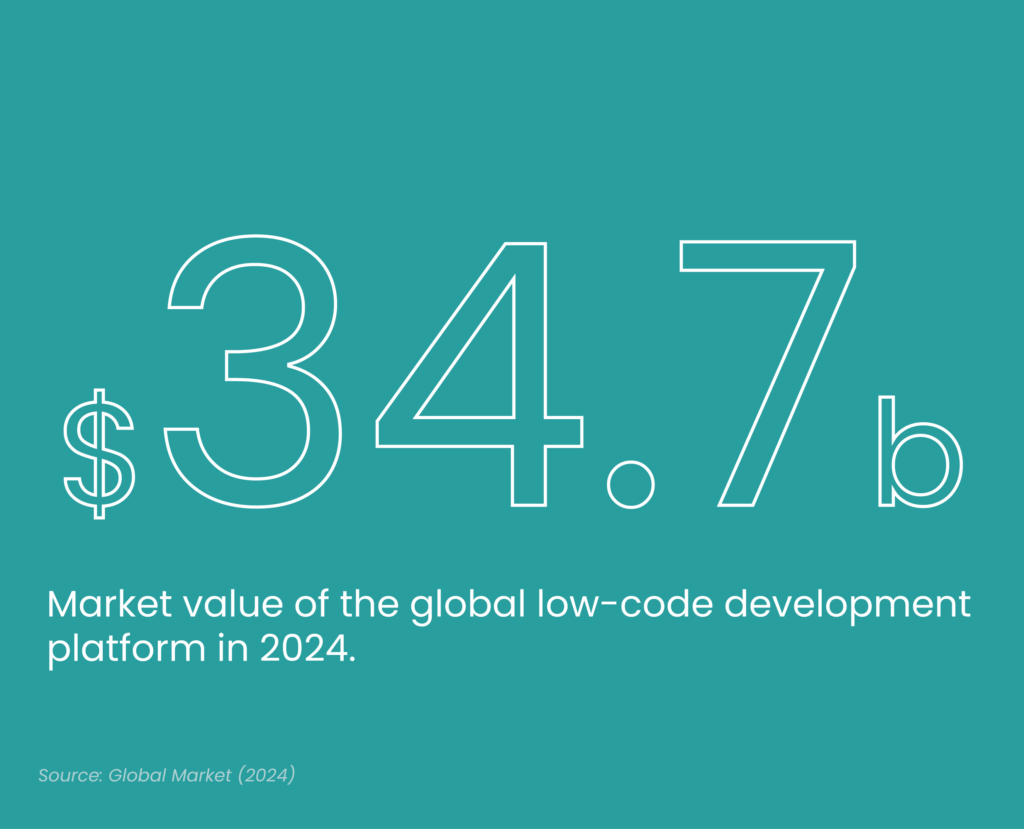
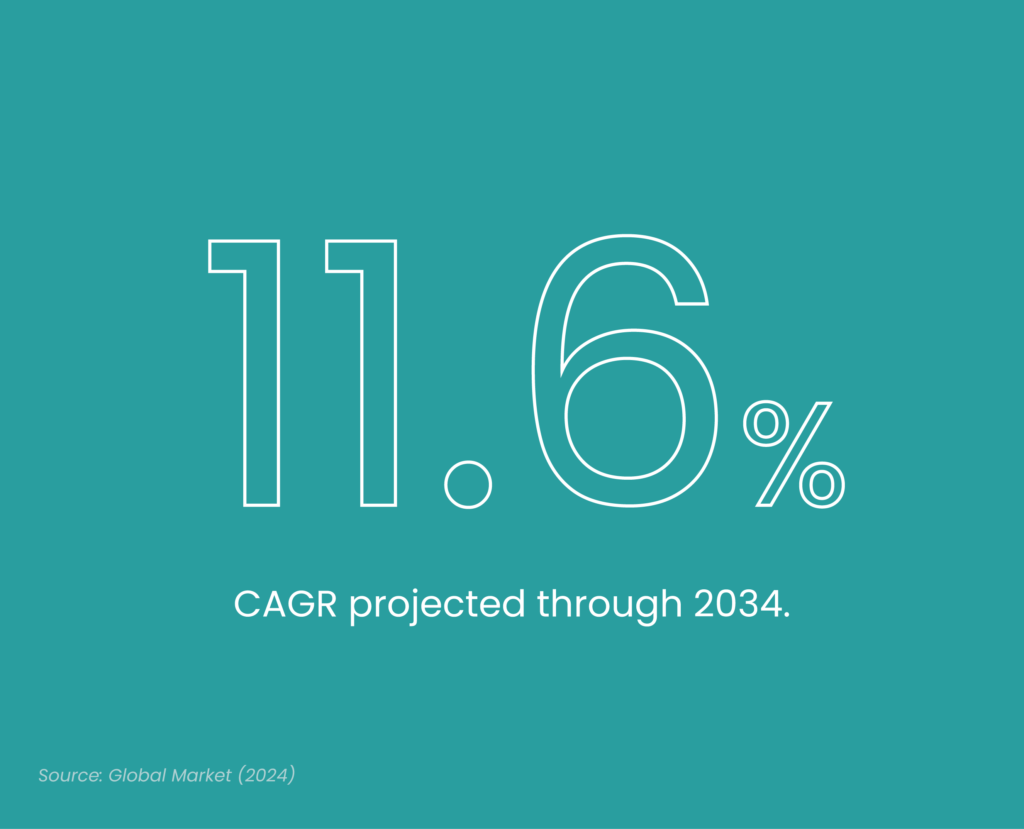
According to Global Market Insights, the global low-code development platform market was valued at USD 34.7 billion in 2024 and is projected to grow at a compound annual growth rate of 11.6 % through 2034, reflecting sustained enterprise demand for accelerated application delivery.
Beyond market size, enterprise adoption has reached a structural tipping point. Multiple industry analyses and vendor-independent surveys indicate that low-code and no-code platforms are now used by more than 65 % of organizations, often across a broad spectrum of application types, from workflow automation to core business systems.
This trajectory aligns with a widely cited forecast from Gartner in 2021, which projected that by 2025, approximately 70 % of new business applications would be developed using low-code or no-code technologies. While precise post-2025 validation varies by industry and region, subsequent market growth and adoption data strongly suggest that low-code has transitioned from a tactical accelerator to a mainstream enterprise development paradigm.
So, what’s changed?
The architectural tolerance of organizations has collapsed. Monolithic systems are no longer economically or operationally viable in environments defined by constant change. Cloud-native infrastructure is no longer a differentiator, it is the baseline assumption. This shift is reflected in platform composition itself: according to Global Market Insights’ 2025 industry report, cloud-based solutions accounted for approximately 64 % of the low-code market in 2024 and are projected to grow at a CAGR exceeding 13 % through 2034.
In this context, low-code’s rise is not about abstraction for its own sake. It is a response to a new reality: enterprises need architectures that are modular, evolvable, and aligned with cloud economics, without re-introducing the rigidity of traditional application stacks.
ODC responds directly to this shift. As emphasized throughout the conference, it is not an upgrade layered on top of existing foundations, it is a structural reinvention of how applications are designed, deployed, and scaled.
As a cloud-native platform, ODC embraces modern architectural principles:
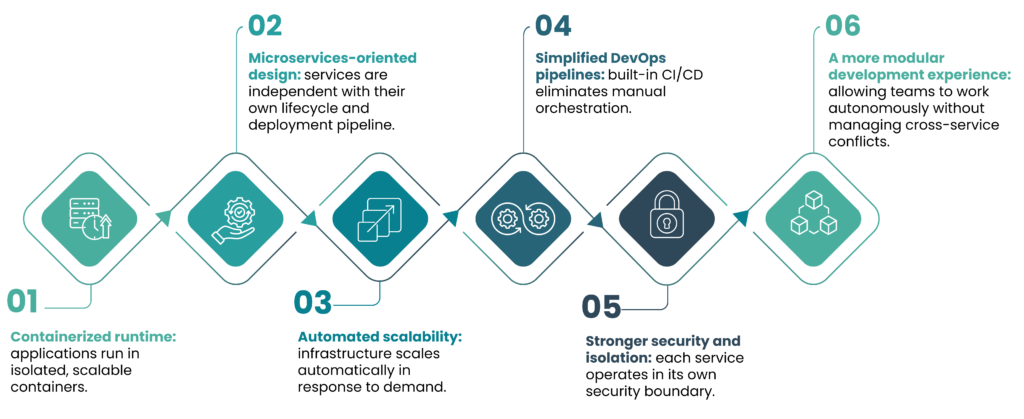
This shift fundamentally changes how applications behave in production, enabling performance, scalability, and maintainability that monolithic designs cannot achieve.
AI-Generated Applications: A New Development Paradigm
One of the most notable capabilities in ODC is AI-assisted application generation. Developers will be able to generate complete, working applications from a single natural language prompt, describing:
- The data model and required entities
- The data model and required entities
- Relationships and dependencies
- Core functionalities
- Business rules
- User flows and interactions
The platform then generates a working application that can be refined and extended.
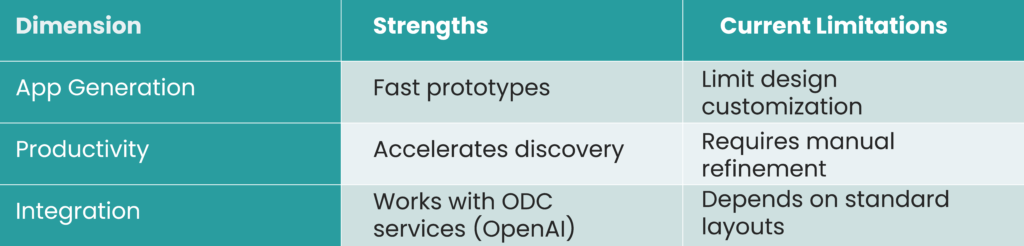
This represents a major help in productivity, especially for early‑stage prototyping or internal tools.
That said, limitations remain. AI-generated applications currently rely on standard OutSystems layouts, which constrains design flexibility. Custom UI/UX and advanced interaction patterns still require manual refinement. The value, however, lies not in replacing developers, but in compressing the path from concept to validated solution.
Even so, the potential is enormous, especially for teams looking to accelerate discovery phases or reduce time‑to‑value.
O11 vs ODC: Understanding the Core Differences
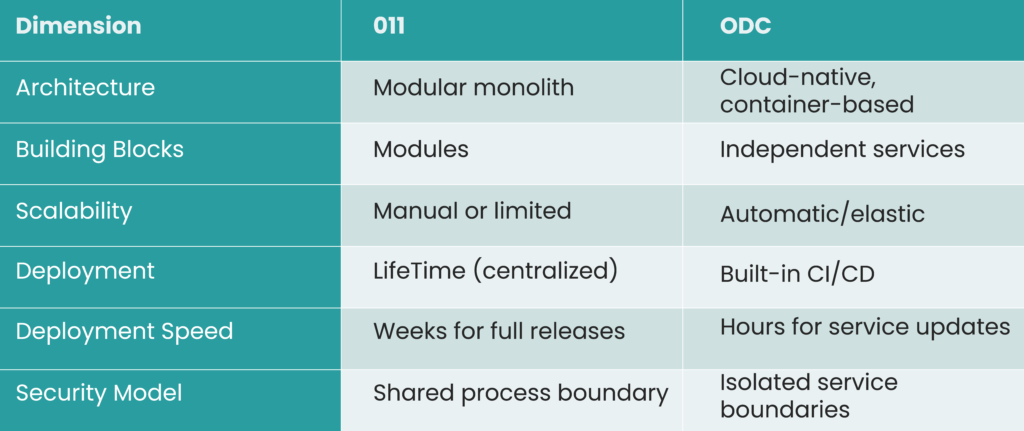
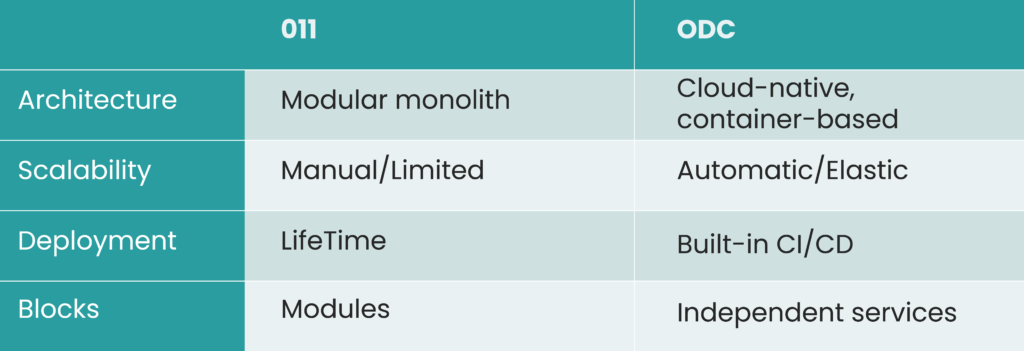
Architecture: Modular Monolith vs Cloud‑Native Services
O11 applications typically follow a layered, modular monolith approach where all components deploy as a single unit. Changes to any module require full application redeployment. ODC, on the other hand, is built on cloud-native principles:
Modules vs Services
In O11, modules are the primary organizational unit, often leading to deployment issues and tightly coupled dependencies. In ODC, the focus shifts to services, becoming the central abstraction. Each service has its own lifecycle, dependencies, and deployment pipeline.
This enables:
- Faster, targeted deployments
- Cleaner, decoupled architectures
- Greater team autonomy
- Independent scaling based on real usage patterns
DevOps & Release Management
O11 relies heavily on LifeTime, which centralizes deployment and governance, a necessary approach for monolithic applications, but a constraint for rapid iteration.
ODC introduces native cloud-native DevOps, including automated pipelines, independent versioning, managed infrastructure, and self-service deployments.
The Challenges and the Road Ahead
Like any major technological shift, the transition from O11 to ODC comes with challenges.
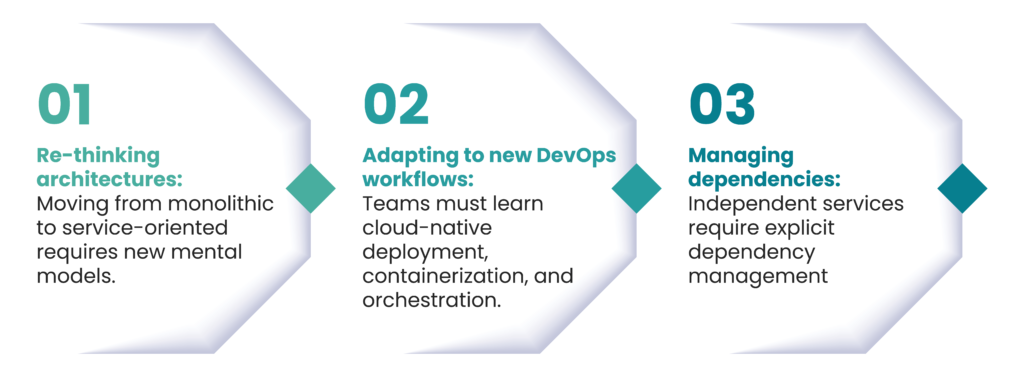
Technical Challenges:
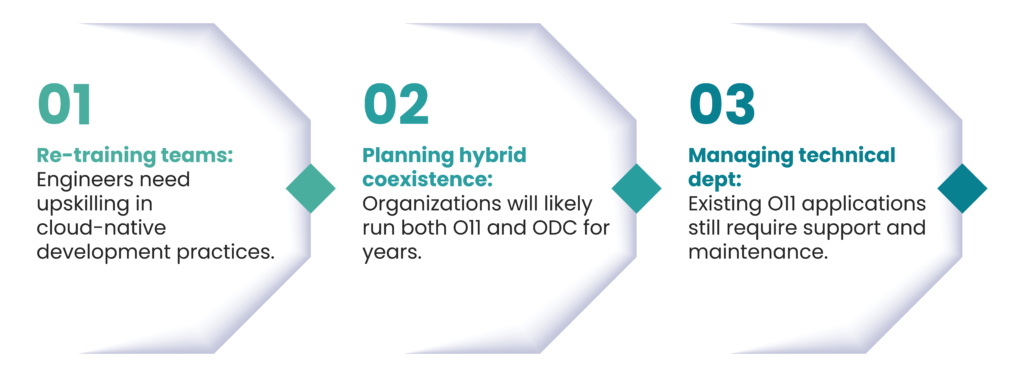
Organization Challenges:
ODC encourages better practices, cleaner code, and more sustainable solutions. The investment in modernization compounds over time through improved maintainability, faster feature delivery, and reduced operational overhead.
One Conference 2025 made clear that the future of OutSystems is cloud-native and modular and the Portuguese unicorn is committed to supporting this journey by offering guidance and support, migration paths to applications from 011 to ODC, and continuous improvements based on user feedback and market needs.
A Future Built on Cloud-Native Principles
ODC represents a future where low‑code is not just fast, it is cloud‑ready, scalable, and architecturally sound. It aligns with modern engineering principles while preserving the productivity that defines OutSystems.
For developers, this means:
- More autonomy: control release cycles independently without waiting for platform-wide deployments.
- Better performance: micro-services scale individually based on actual demand patterns.
- Cleaner architectures: decoupled services are easier to understand, test, and maintain.
- Faster iteration cycles: deploy features in hours or days, not weeks.
- A platform ready for the next decade: cloud-native architecture scales with business growth without re-architecture.
For organizations, it means:
- Reduced operational overhead: automated infrastructure management reduces manual DevOps burden.
- Improved scalability: scale services independently based on real-world demand.
- Stronger security: services are isolated with clear security boundaries.
- Future‑proof applications: cloud-native architecture remains competitive long-term.
Leveraging AI and External Services in ODC
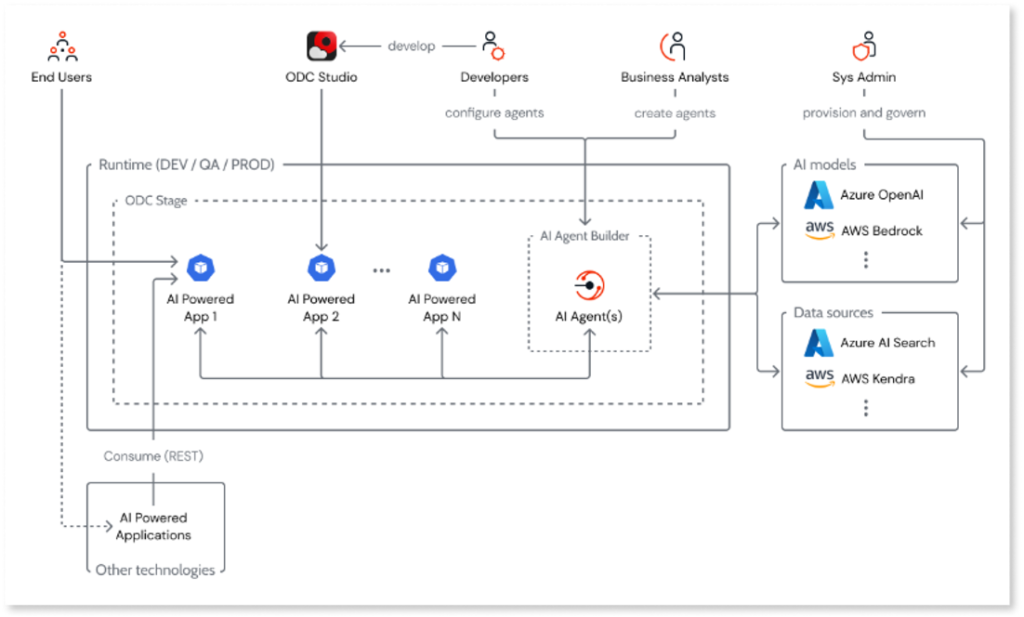
One of the most exciting capabilities demonstrated at the One Conference 2025 was how ODC integrates with external AI services, particularly through the concept of Agents. These agents act as connectors that allow developers to consume APIs from third‑party providers, including OpenAI, in a secure and scalable way.
Real-World Applications
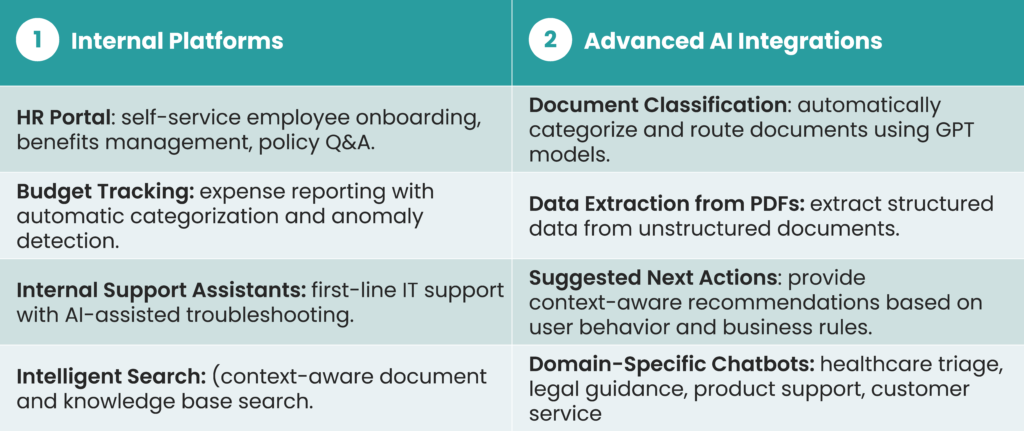
ODC enables rapid deployment of AI-enhanced applications across two categories:
#1 Use Case: Fraud Detection
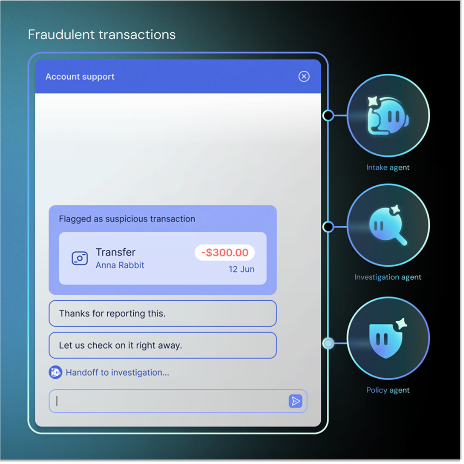
This example showcases a real fraud detection application built using ODC capabilities. It demonstrates how ODC supports the full lifecycle of a fraud use case, from ingesting transaction data and detecting anomalous behavior to presenting clear, actionable insights for investigation teams. By operationalizing advanced analytics in a user-facing application, ODC enables faster fraud identification, improved decision-making, and effective human-in-the-loop oversight in high-risk environments.
#2 Use Case: Agentic AI
Agentic AI extends beyond simple AI calls by embedding goal-driven behaviour directly into applications. In ODC, agents combine contextual reasoning, external AI services, and business logic to take action, not just respond.
Practical examples include automated case triage, compliance analysis, intelligent document handling, and context-aware support assistants. Crucially, these agents remain observable, auditable, and governed. Key requirements for enterprise-grade AI adoption.
In summary
The transition from O11 to ODC isn’t a simple version upgrade, it’s a strategic architectural choice that reflects the realities of modern software delivery.
For new projects, especially those targeting cloud environments, ODC represents the strategic choice for building applications that will scale, evolve, and remain competitive. The cloud-native architecture, built-in AI capabilities, and modern DevOps practices are the foundation for sustainable, long-term application development.
For O11 users, the transition can be gradual, with hybrid coexistence expected for years. But, as cloud-native delivery becomes the norm rather than the exception, ODC becomes the natural choice for what comes next.
The low-code era is no longer about speed alone. It’s about building applications that are intelligent, cloud-ready, architecturally sound, and capable of evolving with business needs.
About the Author

Merlina Garthe is a Developer at Ivy Partners, where she works on enterprise-grade low-code solutions with a strong focus on cloud-native architectures and scalable application design. With hands-on experience across OutSystems, PL/SQL, and databases, she combines practical delivery experience with a solid engineering foundation and through academic training in Computer Engineering. Alongside her consulting work, she is also a Programming Tutor, supporting developers in mastering low-code and data technologies. Her work reflects a growing interest in how modern platforms like OutSystems ODC reshape development practices beyond speed, toward long-term architectural sustainability.